
Checklist for Choosing a Design-Build Contractor
A practical checklist for choosing a design-build contractor before you sign and hand over your home project.
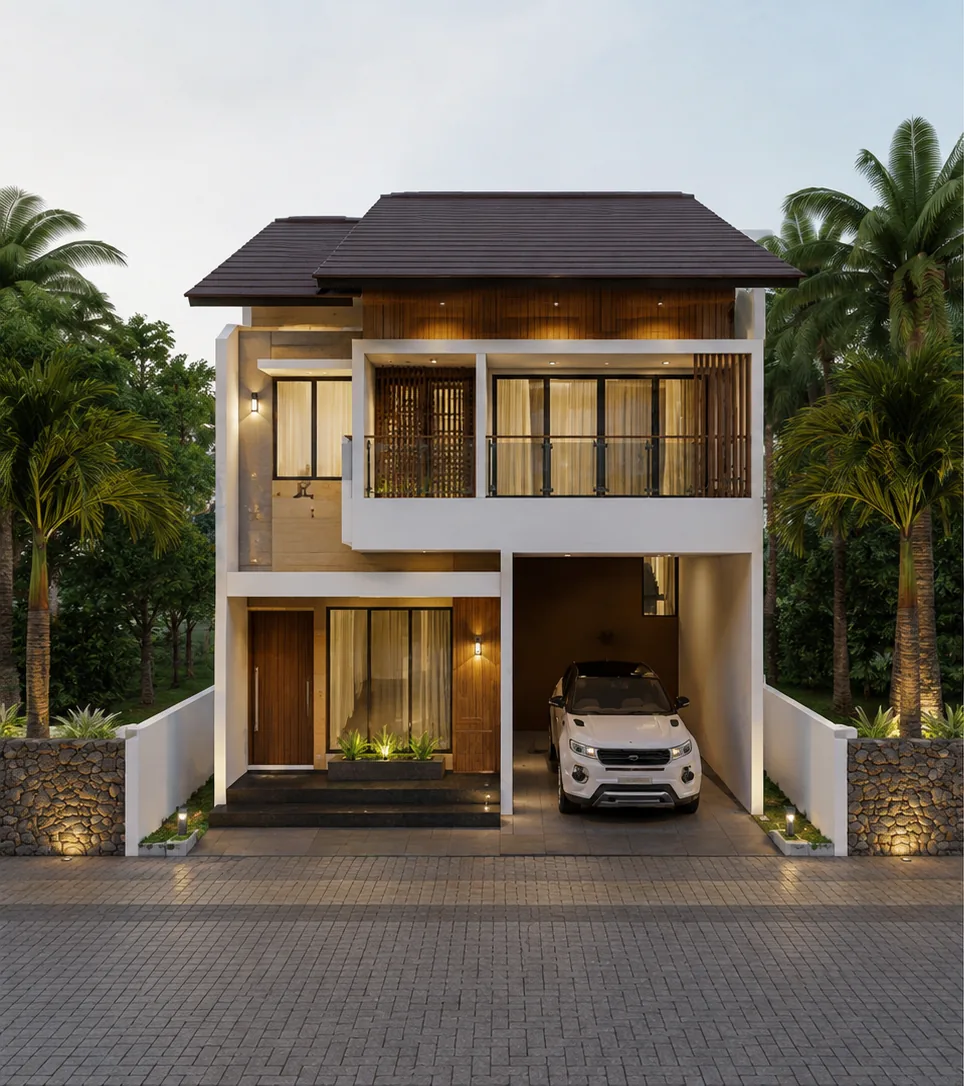
Choosing a design-build contractor means trusting one team with both the design and the construction of your home. This decision directly affects your budget, timeline, and final build quality. Here is what to check before signing a contract.
Why this choice matters
In a design-build arrangement, one team is responsible for design, cost estimation, and construction. If that team lacks a clear working process, mismatches between design and budget often surface only after construction has started. Reviewing a prospective partner's track record and working methods early reduces this risk.
Our article Design-Build or Separate Contractor compares these two approaches in more depth. If you have already decided on design-build, the checklist below helps you evaluate potential partners.
1. Portfolio and style fit
Look at completed projects, not just renderings. Check whether the architectural style and scale of previous work match what you need, whether it is a new home, a full renovation, or a commercial space.
- Is there photo documentation of the built result, not just 3D designs?
- Is the scale of past projects comparable to yours, in terms of size and complexity?
- Are there examples with a similar typology, such as tropical or modern-style homes?
You can browse examples of completed work on our projects page, including Modern Tropical House with Carport and Gabled House with Breeze Block Screen.
2. A structured working process
Ask how the project will run from start to handover. A capable design-build contractor typically has clearly defined phases, each ending with a specific approval point before moving forward.
In general, these phases include initial discovery and data gathering, aligning design with budget, developing technical documentation, and finally construction through to handover. A more detailed explanation of this approach is available on our process page.
Ask prospective contractors to explain their specific phases rather than giving generic answers. Also ask who is responsible at each stage.
3. How estimates and the bill of quantities are prepared
A sound cost estimate is developed alongside the design process, not handed over as a final number at the end. Before signing a contract, you should receive a cost plan, often called RAB (bill of quantities) or BOQ, based on working drawings rather than rough assumptions.
- Does the cost breakdown list items in detail, rather than just a lump sum?
- Is there an explanation of allowance items (provisional budgets for materials not yet finalized) and a contingency for unforeseen conditions?
- What is the process if work changes mid-project?
To understand these cost components better, read How to Read a Construction Budget and RAB, BOQ, Allowance, and Contingency for Owners.
4. How changes in scope are handled
Changes in scope, known as variation orders, are common in construction, whether requested by the owner or caused by site conditions. What matters is how the contractor manages these changes with proper documentation.
Ask whether each change comes with a clear explanation of cost and schedule impact, and requires written approval before work proceeds. A fuller discussion is available in Variation Orders: When They Are Normal and How to Control Them.
5. Clarity of contract and supporting documents
A construction contract should spell out the scope of work in detail, the schedule, the payment mechanism, and the warranty period after handover. Be cautious of contracts that simply refer to "as per drawings" without attached material specifications and a cost breakdown.
Also check whether there is a mechanism for regular progress reporting, along with a quality checklist and a punch list (a record of items to be corrected before handover) as part of the standard process. If you are unfamiliar with reading these documents, How to Read an Architect or Contractor Proposal is a useful starting point.
6. Discussing permits from the start
PBG, the building approval that has replaced the older IMB system under more recent regulations, is best discussed from the design stage rather than after drawings are fully finalized. Ask whether your prospective contractor factors permit considerations into the design process, even though the actual permit processing is usually a separate scope of work.
For more on timing, see Home Building Permit: When to Start Discussing It.
7. References and communication
Where possible, ask for references from previous clients with similarly scaled projects. Also pay attention to how the team responds to your questions during the proposal stage, since this communication pattern usually continues throughout the project.
You can also review completed project details, such as Modern Timber and Stone House or Warm Tropical Home Interior, to see how well the initial concept matches the final result.
Frequently asked questions
Is a design-build contractor always more expensive than a separate contractor?
Not necessarily. Cost depends on the scope of work, material specifications, and design complexity. See The Cost of Design-Build Homes and What Shapes It for more on this.
How long should the contractor selection process take?
Timing varies depending on project complexity and the number of candidates being compared. What matters more is ensuring every item in this checklist is clearly answered, rather than rushing the decision.
Do I still need to review the cost breakdown if I choose design-build?
Yes. Choosing design-build does not remove the need to understand your cost breakdown. Reviewing the details still matters so you know exactly where your funds are allocated.
If you are comparing potential partners for a new home project, our Design & Build service reflects this kind of structured working approach. To discuss your specific project needs, you are welcome to request an initial project review.