
Understanding the RAB: How to Read a Construction Budget Before You Build
A construction budget is more than a list of numbers. Learn what it contains, how it differs from a per-m² price, and what to check before you sign.
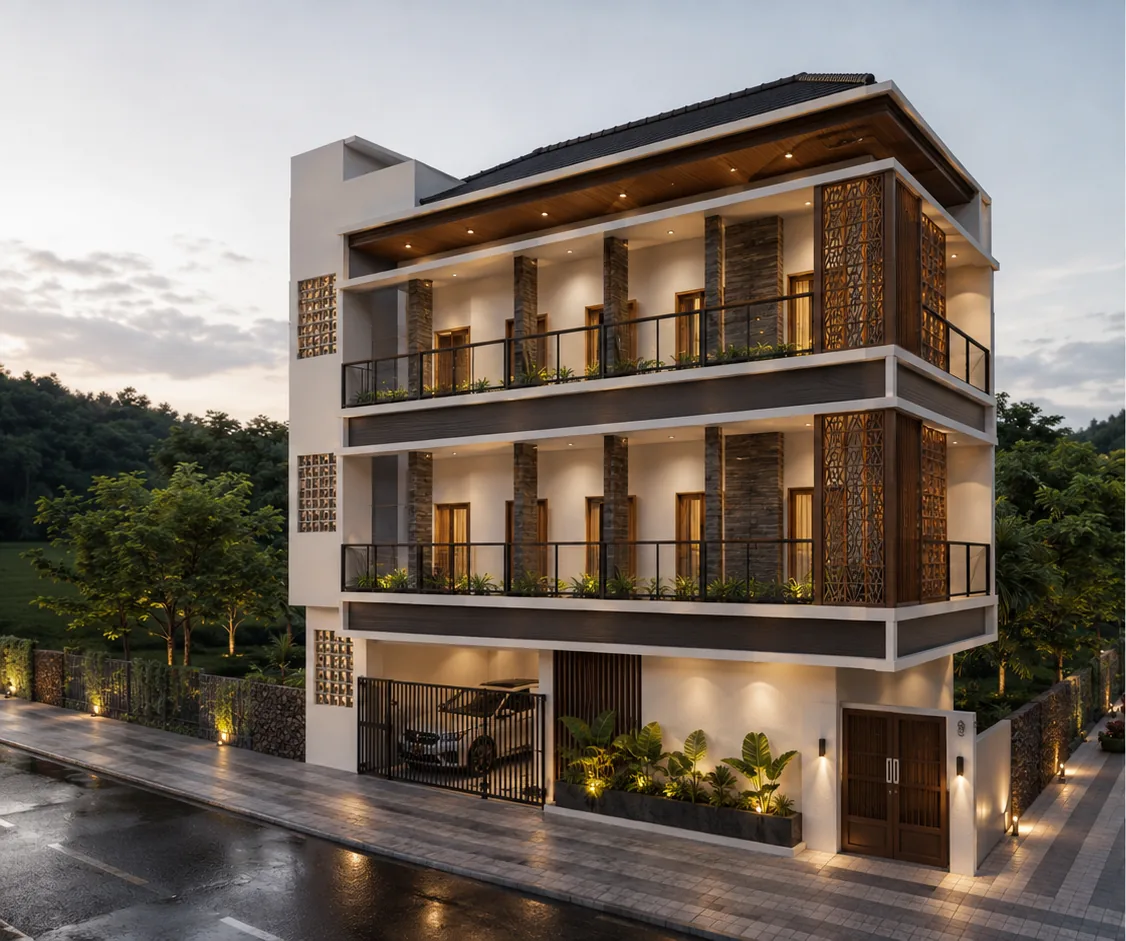
In Indonesia, a construction budget is called a Rencana Anggaran Biaya (RAB): a document that itemises the estimated cost of every piece of work in a project. A good RAB shows where your money goes and becomes the basis for controlling costs during construction.
What does an RAB contain?
It is usually grouped by type of work, for example:
- Preparation (site clearing, demolition, site store and office)
- Earthworks and foundations
- Structure (columns, beams, floor slabs)
- Walls and plastering
- Roofing
- Floors, frames, doors and windows
- Electrical and plumbing installation
- Finishing (paint, sanitary ware and so on)
Each line typically lists the description, quantity, unit, unit price and total.
Per-m² price vs a detailed RAB
A per-m² price is useful as a first reference, but a detailed RAB is far more accurate because it calculates the real requirements of each task. Two houses of the same size can differ significantly in cost because of soil conditions, number of storeys or material specifications.
What to check
- Material specifications. Make sure brands, types or grades are stated, not just "tiles" or "paint".
- Quantities. They should be reasonable and match the working drawings. Ask about any figure that looks odd.
- Exclusions. For example fences, landscaping or an electricity capacity upgrade. These should be written down so they don't become surprise costs.
- Other costs. Ask whether supervision, permits and taxes are included.
In summary
An RAB is not just a list of numbers. It is an agreement about what will be built and to what quality. Take the time to go through it with your design team before work begins.