
What a Home Construction Contract Should Include
A sound home construction contract defines scope, attached documents, price and payments, schedule, change control, quality, and handover. Here is what to check before signing.
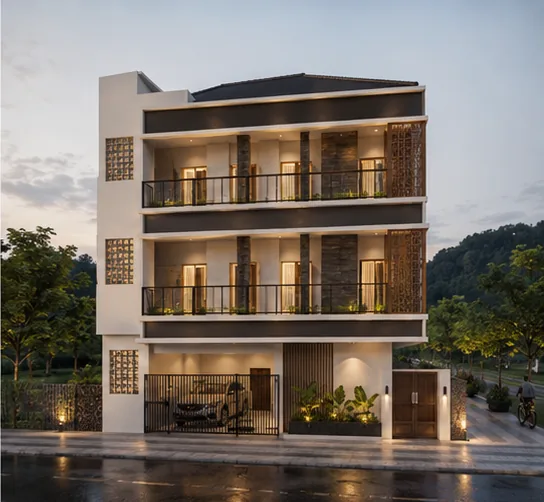
A good home construction contract does more than state a price and a completion date. It defines what will be built, which documents govern the work, how payments and changes are handled, and when the work is considered complete. When these points are clear before signing, most on-site disputes can be prevented.
Why the contract shapes the whole project
Many homeowners treat the contract as a formality once the price is agreed. Yet when a misunderstanding arises on site, the contract and its attachments are the only reference both parties can rely on. Verbal agreements and chat messages make a weak basis for decisions.
The most common risk is rarely bad faith. It is room for interpretation: unwritten specifications, vague scope, or no agreed procedure for changes. A well-structured contract narrows that room.
Scope of work and attached documents
The most important part of the contract is the scope definition. A line such as "build a two-storey house as designed" is not enough. The scope should refer to documents that are attached and signed by both parties.
- Construction drawings: plans, elevations, sections, details, plus structural and mechanical-electrical drawings used on site.
- Technical specifications: type, brand or equivalent, and grade of material for each major work item.
- RAB and BOQ: the RAB (cost budget) summarises costs per work package, while the BOQ (bill of quantities) lists quantities and unit rates. Together they show what the contract price includes.
- Exclusions: work not included, such as loose furniture, landscaping, utility power connection, or permit processing.
The contract should also set an order of precedence between documents, so it is clear which one governs if drawings and specifications differ. For permits, state clearly who is responsible. The PBG (building approval, which replaced the IMB under Government Regulation No. 16 of 2021) is best discussed early, as explained in Home Building Permit: When to Start.
Items not yet finalised should be written as allowances (provisional sums), with their value and adjustment method stated. See RAB, BOQ, Allowance, and Contingency for Owners.
Contract price, payments, and changes
Price and contract type
Check whether the price is fixed for the agreed scope (lump sum) or remeasured on installed quantities (unit price). Both are normal. What matters is knowing which items can change, and on what basis.
Payment terms
Payments should be tied to verifiable physical progress rather than calendar dates alone. Specify invoicing conditions, supporting documents, and the portion retained until the defects period ends. More detail is in Contractor Payment Terms for a Home Build.
Variation orders
Changes almost always happen, whether requested by the owner or triggered by site findings. The contract should require every variation order (a formal change instruction) to be submitted in writing, priced for cost and time impact, and approved before work proceeds. Without this, extra costs only surface at the end. See also Variation Orders: When Normal and How to Control Them.
Schedule and events beyond control
The contract should include a master schedule with key milestones, such as structure complete, roof installed, and finishing started. This lets you read progress objectively.
Equally important are the rules for extending time. The contract should state which conditions may shift the schedule, such as prolonged extreme weather, delayed owner decisions, or approved changes. Delay provisions and their consequences should be fair and balanced for both sides. A contract that promises a completion date without addressing any conditions is, in practice, less realistic.
Quality, reporting, and handover
The contract should explain how quality is checked. Provisions worth including:
- Regular progress reports with photos, completion percentages, and issues needing decisions. See Construction Progress Reports: What to Expect.
- Inspection points before work is covered up, for example reinforcement before concrete pouring or services before ceilings are closed.
- Punch list: a list of items still to be corrected or completed before handover.
- Handover certificate and defects liability period, including which defects are covered and expected response times.
Documents delivered at handover, such as as-built drawings and material lists, should also be named. See Building Handover: What the Client Receives. Finally, set out a dispute resolution path, starting with discussion and clear escalation steps.
How the contract is prepared in design and build
In new home design and build, the contract does not appear out of nowhere. At Brun Vert Studio, estimates are developed alongside the design from the Design & Cost Alignment phase. Drawings, specifications, and the RAB/BOQ are refined during Technical Development and prepared before the construction contract is signed.
Each phase ends with an approval point, so the contract reflects decisions that are already documented. You can see the full sequence on our Process & Safeguards page.
Frequently asked questions
Is a one- or two-page contract enough?
For a new home, generally not. The main body can be concise, but the drawings, specifications, and RAB/BOQ must be complete, because that is where the real scope is defined.
Can I ask for changes to the contract before signing?
Yes, and it is normal to do so. Discuss anything unclear, then make sure revisions appear in the final written document rather than as verbal agreements.
Does a contract guarantee that costs will not increase?
No contract removes every risk. A good contract makes each cost change visible, justified, and approved in advance, which keeps the budget under control.
If you are planning a new home and want a contract built on a mature design and budget, you are welcome to request an initial project review. We will look at your needs, site, and budget range before discussing next steps.